By Peyton Majors
Christian Action League
June 14, 2024
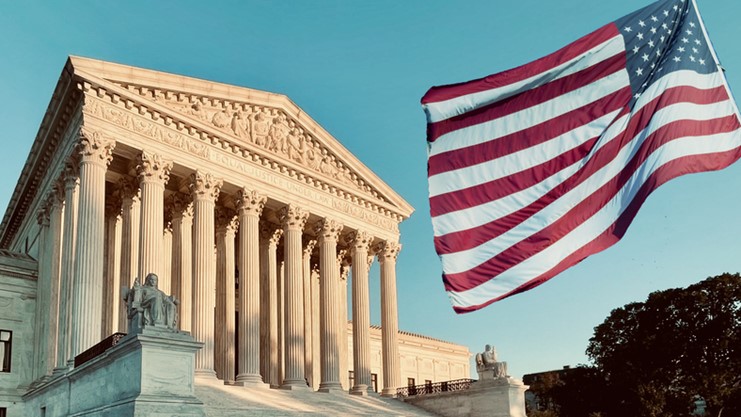
The U.S. Supreme Court dodged the question on the safety of the abortion pill this week when it unanimously ruled that a coalition of pro-life doctors and medical groups did not have legal standing to bring the case.
In a 9-0 decision authored by Justice Brett Kavanaugh, the justices acknowledged that the pro-life coalition has “sincere legal, moral, ideological, and policy objections to elective abortion and to FDA’s relaxed regulation” of the abortion pill. But “under Article III of the Constitution, those kinds of objections alone do not establish a justiciable case or controversy in federal court,” Kavanaugh wrote.
“Here, the plaintiffs have failed to demonstrate that FDA’s relaxed regulatory requirements likely would cause them to suffer an injury in fact,” he wrote. “For that reason, the federal courts are the wrong forum for addressing the plaintiffs’ concerns about FDA’s actions. The plaintiffs may present their concerns and objections to the President and FDA in the regulatory process, or to Congress and the President in the legislative process. And they may also express their views about abortion and mifepristone to fellow citizens, including in the political and electoral processes.”
Citing a previous Supreme Court case, Kavanaugh added, “No principle is more fundamental to the judiciary’s proper role in our system of government than the constitutional limitation of federal-court jurisdiction to actual cases or controversies.”
The pro-life coalition lacks the legal standing to sue, Kavanaugh wrote, because they “do not prescribe or use” the abortion pill.
“And FDA is not requiring them to do or refrain from doing anything,” Kavanaugh wrote. “Rather, the plaintiffs want FDA to make mifepristone more difficult for other doctors to prescribe and for pregnant women to obtain. Under Article III of the Constitution, a plaintiff ’s desire to make a drug less available for others does not establish standing to sue. Nor do the plaintiffs’ other standing theories suffice. Therefore, the plaintiffs lack standing to challenge FDA’s actions.”
The abortion pill involves two drugs: mifepristone and misoprostol. Mifepristone blocks the hormone progesterone, causing the lining of the uterus to break down in order to kill the unborn baby. Misoprostol sparks contractions and a delivery of a dead fetus. The two drugs can be taken only early in the pregnancy.
The pro-life coalition argued that the FDA has placed the safety of women at risk by removing the necessity of in-person doctor visits in order to use the pill. When the abortion pill was approved in 2000, such visits were required.
Erin Hawley, senior counsel of Alliance Defending Freedom (ADF), indicated the legal battle is not over. ADF represented the Alliance for Hippocratic Medicine, three other national medical associations and individual doctors. Hawley said three states that sided with the coalition — Idaho, Kansas and Missouri — could advance the arguments in court and potentially have standing.
“We are disappointed that the Supreme Court did not reach the merits of the FDA’s lawless removal of common sense safety standards for abortion drugs,” she said. “Nothing in today’s decision changes the fact that the FDA’s own label says that roughly one in 25 women who take chemical abortion drugs will end up in the emergency room — a dangerous reality the doctors and medical associations we represent in this case know all too well. The FDA recklessly leaves women and girls to take these high-risk drugs all alone in their homes or dorm rooms, without requiring the ongoing, in-person care of a doctor. While we’re disappointed with the court’s decision, we will continue to advocate for women and work to restore commonsense safeguards for abortion drugs — like an initial office visit to screen for ectopic pregnancies. And we are grateful that three states stand ready to hold the FDA accountable for jeopardizing the health and safety of women and girls across this country.”
Rev. Mark Creech, executive director of the Christian Action League, said the decision “leaves women vulnerable by failing to address the FDA’s irresponsible relaxation of safety standards for abortion drugs.”
“There are two victims from the FDA’s reckless approval of the abortion pill: the innocent unborn children and the women who falsely believe the government has their best interest in mind,” Creech said. “We remain committed to advocating for necessary safeguards to protect women’s health and safety.”
This decision could directly affect North Carolina. Recently, the U.S. District Court addressed the 2023 pro-life bill in the Tar Heel state, which imposed stricter measures for women seeking chemical abortions. A federal judge ruled that state officials could not contest rules previously set and then overturned by the FDA. In her ruling, Judge Catherine Eagles stated that parts of the North Carolina law, which prevent non-physician healthcare providers from prescribing the drug, demand in-person visits for prescribing, dispensing, and administering the drug, require an in-person follow-up appointment, and necessitate reporting non-fatal adverse events to the FDA, conflict with Congress’ intentions and are therefore overridden.
